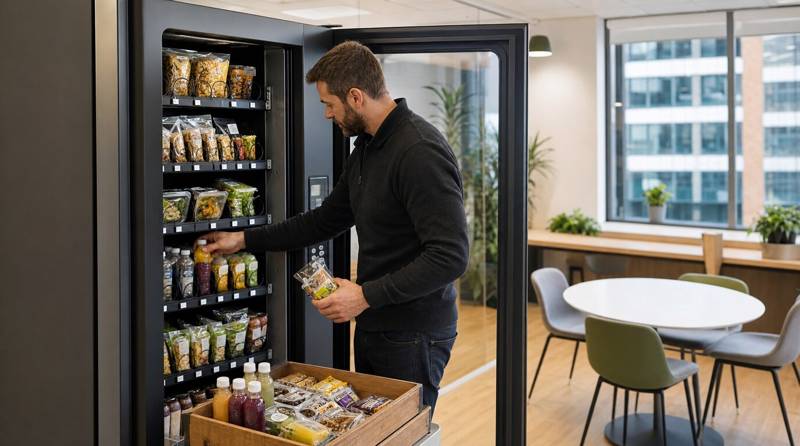
A vending machine business is one of the more accessible ways to build a small passive income stream in the UK, but the word passive hides a fair amount of upfront cost and ongoing legwork. The machine itself is only one line in the budget. Site fees, stock, card payment kit and restocking logistics all add up, and the businesses that do well tend to be the ones that treated site selection as seriously as the machine purchase.
This guide sets out realistic 2026 costs for getting started, whether you are buying one machine to place in a local gym or building out a small fleet across several sites.
Vending Machine Purchase Costs
The machine itself is the biggest single upfront cost, and prices vary enormously depending on whether you buy new or used, and how much technology is built in. The table below covers realistic 2026 UK prices per machine.
| Machine Type | Typical Cost |
|---|---|
| Used snack machine (refurbished) | £800 to £1,600 |
| Used drinks machine (refurbished) | £900 to £1,800 |
| New standard snack or drinks machine | £2,000 to £3,500 |
| New combination snack and drinks machine | £3,000 to £5,000 |
| Smart vending machine (card payment, remote monitoring built in) | £3,500 to £7,000 |
| Micro market / open shelf kiosk unit | £4,500 to £9,000 |
Buying used from a specialist vending reseller is the most common way for new operators to keep costs down. A refurbished machine with a fresh service record is a sensible first purchase, and many UK vending suppliers offer finance or lease-to-buy arrangements if you do not want to pay the full amount upfront.
Site Fees and Commission
Getting a machine placed in a good location is arguably more important than which machine you buy. Site hosts typically expect a cut of sales or a fixed fee in exchange for the space, electricity and footfall.
| Arrangement Type | Typical Cost |
|---|---|
| Low footfall site, favour or goodwill placement | £0 to £20 per month |
| Fixed monthly site fee (small office, local shop) | £20 to £100 per month |
| Commission on sales (gyms, colleges) | 10% to 15% of gross sales |
| Commission on sales (high footfall, transport hubs, large offices) | 15% to 20% of gross sales |
| Electricity contribution (if not included in fee) | £5 to £15 per month per machine |
Many first time operators underestimate how much negotiating site fees matters. Two machines with identical footfall can produce very different profit if one site charges a flat £30 a month and the other takes 20% commission on turnover. Always ask for footfall numbers or observe the location yourself before agreeing terms.
Stock and Restocking Costs
Stock is your main recurring cost and the one you have the most control over, since buying in bulk and shopping around wholesalers directly affects your margin.
- Full stock fill, standard snack and drinks machine: £150 to £350 in wholesale stock depending on capacity.
- Wholesale snack unit cost: 30p to 60p per item, typically sold at £1 to £1.50, giving a gross margin of roughly 50 to 65%.
- Wholesale drink unit cost: 40p to 80p per can or bottle, typically sold at £1.20 to £2, giving a similar margin range.
- Cash and carry membership (Bookers, Costco): £0 to £30 per year, usually the cheapest source for standard branded stock.
- Specialist vending wholesaler account: No membership fee but slightly higher unit prices, offset by delivery direct to your storage or site.
Restocking frequency depends entirely on sales volume. A busy machine may need restocking twice a week, while a quiet one might only need attention every fortnight. Factor your own time and fuel or travel cost into the real profit picture, not just the wholesale margin.
Card Readers and Technology
Cash only vending machines are increasingly rare, and most site hosts now expect contactless payment as standard. This is one area where spending a bit more upfront pays off quickly in higher sales conversion.
- Retrofit contactless card reader: £150 to £400 per machine, usually a one-off hardware cost plus a small monthly software fee of £5 to £15.
- Card processing fees: Typically 1.5% to 2.5% per transaction through providers such as Nayax or PayRange, common platforms for UK vending.
- Remote monitoring software: £5 to £20 per machine per month, letting you see stock levels and sales remotely without a physical visit, which saves wasted restocking trips.
- Telemetry / cellular connectivity for monitoring: Often bundled with the monitoring software subscription above.
Insurance, Registration and Legal Costs
Running a vending business, even a small one, comes with a handful of legal and administrative costs that are easy to overlook when budgeting.
- Registering as self-employed with HMRC: Free, required once your income exceeds £1,000 per year.
- Forming a limited company (optional): £12 online via Companies House, worth considering once you have multiple machines and want liability protection.
- Public liability insurance: £120 to £300 per year, and most site hosts will require proof of this before allowing a machine on their premises.
- Food business registration (if selling food or drink): Free, but must be done with your local council at least 28 days before trading.
- Portable Appliance Testing (PAT) for electrical safety: £15 to £30 per machine per year, often requested by site hosts.
Realistic Profit Per Machine
Profit varies enormously by location, but here is a realistic picture for a single well placed snack and drinks machine.
| Monthly Figure | Low Footfall Site | High Footfall Site |
|---|---|---|
| Gross sales | £150 to £350 | £600 to £1,400 |
| Stock cost (approx 40%) | £60 to £140 | £240 to £560 |
| Site commission or fee | £20 to £50 | £90 to £280 |
| Card processing and monitoring | £10 to £25 | £20 to £45 |
| Estimated monthly profit | £60 to £150 | £250 to £600 |
Most operators do not scale by pouring money into one machine. Instead, once a first machine proves a location works, they reinvest profit into a second and third machine in different sites, spreading risk and building toward a genuinely part-time or full-time income across a small fleet.
How to Keep Startup Costs Down
- Start with one used machine. Prove the model at one good site before committing to a fleet.
- Negotiate a fixed fee over commission where possible. A flat monthly fee is easier to budget against and rewards you for growing sales.
- Buy stock from a cash and carry, not a supermarket. Retail prices erase your margin almost entirely.
- Ask about lease-to-buy machine finance. Several UK vending suppliers offer this, spreading the machine cost over 12 to 24 months instead of one large outlay.
- Prioritise card payment from day one. Sites with high contactless uptake convert significantly better than cash only setups, and it is far cheaper to buy a machine with it built in than retrofit later.
- Choose your first site carefully. A single well chosen location will teach you more about demand and restocking rhythm than three mediocre ones.
Starting a vending machine business in the UK costs £2,500 to £8,000 for one or two machines including stock, site setup and a card reader, or as little as £1,200 to £2,000 for a single used machine done on a tight budget. Site selection matters more than machine choice, so spend time evaluating footfall and negotiate fixed fees where you can. Public liability insurance and, if selling food, council registration are not optional extras. If you are exploring other low overhead business ideas, see our guide on starting a dog walking business too.