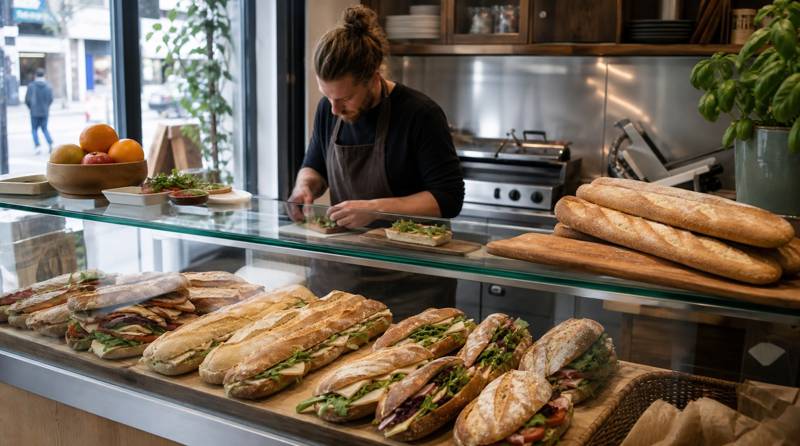
A sandwich shop is one of the more approachable food businesses to start, since the core offer does not need a full commercial kitchen the way a restaurant does. That keeps the entry cost lower than most food retail, but the range is still wide, from a small chilled counter in a kiosk unit through to a full deli-style shop with seating and a proper prep kitchen.
This guide covers realistic 2026 UK costs across the main routes into opening one, from a takeaway counter to a full sit-in shop.
Startup Costs by Business Model
How much of a kitchen and how much seating you commit to is what drives the biggest swings in cost.
| Model | Typical Startup Cost |
|---|---|
| Mobile or market stall round | £3,000 to £8,000 |
| Small takeaway kiosk or counter | £8,000 to £20,000 |
| Mid-size shop with limited seating | £25,000 to £50,000 |
| Full deli-style shop, kitchen and seating | £50,000 to £90,000+ |
Registration and Legal Costs
- Food business registration: Free, but must be done with your local council at least 28 days before trading.
- Level 2 Food Hygiene and Safety certificate: £20 to £30 per person, online, needed by anyone handling food.
- Public liability insurance: £120 to £300 a year for a small operation, more for a shop with regular footfall.
- Product liability insurance: £100 to £250 a year, often bundled with public liability since you are selling food people consume.
- Business insurance for a shop: £300 to £800 a year covering premises, equipment and stock.
Equipment Costs
Equipment is where a mobile round and a full shop diverge most sharply.
| Item | Typical Cost |
|---|---|
| Chilled display counter | £1,000 to £3,000 |
| Commercial fridge or chiller | £500 to £2,000 |
| Panini press or sandwich toaster | £150 to £400 |
| Prep bench and food-safe storage | £300 to £1,200 |
| Till or point of sale system | £300 to £800 |
| Packaging and labelling (allergen-compliant) | £150 to £500 initial stock |
| Full commercial kitchen fit-out (if needed) | £10,000 to £25,000 |
| Seating area fit-out (if included) | £3,000 to £12,000 |
Buying used catering equipment can cut this significantly, and is common for first-time sandwich shop owners keeping cash flow tight before trading history proves the concept.
Premises Costs, If Going Fixed Location
- Shop rent: Varies enormously by footfall, from £6,000 a year in a small town to £30,000+ for a high-footfall office district or train station unit, which is often where sandwich shops do best.
- Shop fit-out beyond the kitchen: £4,000 to £15,000 for counters, shelving, signage and decor.
- Deposit and first month's rent: Typically 3 months' rent as a deposit plus the first month upfront.
- Business rates: Small business rates relief can reduce or eliminate this for a small unit, check eligibility with your local council.
Ongoing Running Costs
- Ingredients: Bread, fillings and other core ingredients typically run 28 to 35 percent of revenue, tighter than many food businesses thanks to low prep and cook time.
- Staff: Lunchtime rushes mean most shops need at least one extra pair of hands beyond the owner for peak hours, even if quiet mid-morning.
- Energy: Lower than a bakery or restaurant, since chilling and light toasting draw far less power than ovens running all day.
- Packaging: An easy-to-underestimate ongoing cost that scales directly with volume once trade builds.
How to Start Cheaper
- Start mobile or with a market stall round to prove demand. Lower cost, lower risk way to build a customer base before committing to a lease.
- Prioritise footfall location over shop size. A small unit somewhere busy outperforms a bigger unit somewhere quiet for this kind of business.
- Buy used chiller and counter equipment where condition allows. Catering equipment holds its value well and is widely available from closing units.
- Keep the menu tight at launch. Fewer ingredients means less waste and a simpler, cheaper initial kitchen setup.
- Register for VAT flat rate scheme if turnover allows. Can simplify admin and, depending on cost structure, sometimes improve margin over standard VAT accounting.
Opening a sandwich shop in the UK costs £8,000 to £20,000 for a small takeaway counter, £25,000 to £50,000 for a mid-size shop with some seating, and £50,000 upwards for a full deli-style shop with a proper kitchen. Registration is free, but a Level 2 Food Hygiene certificate and proper insurance are essential from day one regardless of scale. Starting mobile or with a small kiosk to prove demand before leasing a bigger unit is the lowest-risk route in. If you are also weighing up a cafe instead, see our guide on opening a cafe.