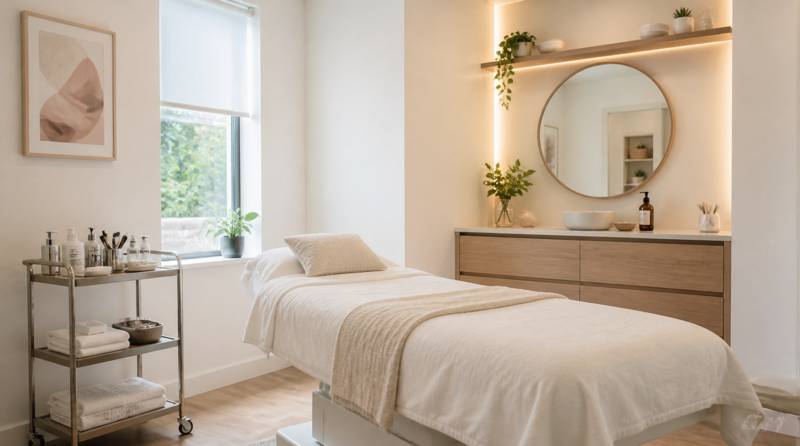
A beauty salon can start small, a single rented treatment room with one therapist, or scale up to a multi-room high-street business from day one, and the gap between the two is the single biggest factor in cost. Licensing, insurance and hygiene standards apply at either scale, since local authorities regulate most beauty treatments regardless of how big the business is.
This guide covers realistic 2026 UK costs for both a single-room setup and a small multi-room salon, plus the licensing and stock costs new owners most commonly underestimate.
Startup Costs by Model
Whether the business rents one room, takes a small unit, or fits out a proper multi-room premises is the single biggest cost decision.
| Model | Typical Startup Cost |
|---|---|
| Single treatment room, rented within an existing salon | £8,000 to £20,000 |
| Small unit, 1 to 2 rooms, own lease | £18,000 to £35,000 |
| High-street salon, 2 to 4 treatment rooms | £25,000 to £60,000 |
| Larger salon, 5+ rooms, retail floor | £50,000 to £100,000+ |
Fit-Out and Equipment
Equipment needs scale directly with the range of treatments offered, and hygiene-critical items such as sterilisers are non-negotiable regardless of scale.
- Treatment couch, trolley and steriliser, per room: £1,500 to £4,000.
- Reception desk, seating and shopfront signage: £2,000 to £6,000.
- Fit-out, flooring, lighting and plumbing for a wet-treatment room: £4,000 to £15,000 depending on the state of the shell.
- Specialist machines, such as laser, IPL or advanced skin devices: £3,000 to £20,000 each if offered, a major optional cost driver.
- Booking software and card payment terminal: £30 to £100 a month combined.
Licensing and Insurance
Beauty treatments carry genuine hygiene and health risk, so licensing and insurance are treated seriously by both local authorities and clients.
| Licensing/Insurance | Typical Annual Cost |
|---|---|
| Special treatment licence (local council) | £150 to £400 |
| Treatment/malpractice insurance | £200 to £600 |
| Public liability insurance | £100 to £250 |
| Employer's liability (if hiring staff) | £150 to £400 |
| Portable appliance testing (PAT) for equipment | £60 to £150 |
The special treatment licence usually needs renewing annually and requires every practitioner performing a licensed treatment, such as electrolysis or semi-permanent make-up, to be individually named and sometimes separately qualified before approval.
Stock and Consumables
Getting the opening stock order right matters, since overbuying ties up cash and underbuying means turning clients away for treatments the salon cannot currently deliver.
- Skincare and treatment product ranges: £1,000 to £3,000 for a single-room setup, £3,000 to £8,000 for multiple rooms.
- Nail polish, wax and consumables: £300 to £1,000 to start, then a recurring monthly restock.
- Retail products for resale: £500 to £2,000, optional but a genuine additional revenue stream once established.
- Towels, gowns and laundering setup: £300 to £800, plus an ongoing laundry cost if not done in-house.
The Cash Flow Gap
The single biggest financial risk for a new beauty salon is not the setup cost, but the months it takes to build a regular client base large enough to cover rent and wages consistently. Beauty is a repeat-visit, word-of-mouth business, so most new salons take 6 to 12 months to reach a steady booking rate, while rent, insurance and any staff wages run from day one regardless of how full the diary is. Salons opening with an existing client base transferred from a previous employer or a chair-rental arrangement usually reach profitability faster, often within 3 to 6 months, since word-of-mouth momentum already exists. Most new owners should budget at least 6 months of running costs, typically £8,000 to £20,000 depending on the model, as working capital rather than relying on early takings to fund month-to-month costs. If comparing this against a lower-overhead beauty business, see our guide to starting a nail salon for a narrower-scope comparison.
Ongoing Running Costs
- Rent and business rates, per room or small unit: £400 to £1,800 a month depending on location.
- Insurance renewal: £450 to £1,250 a year combined.
- Product and consumable restocking: £300 to £1,200 a month depending on client volume.
- Accountancy: £500 to £1,200 a year for a limited company or sole trader with proper bookkeeping.
- Licence renewal: £150 to £400 a year, per the table above.
Ways to Reduce the Cost
- Start by renting a single room within an existing salon. This avoids a full commercial lease and fit-out while a client base is being built, and is the lowest-risk route into ownership.
- Delay specialist machines until demand is proven. Laser and advanced skin devices are the single biggest optional cost and are easiest to add once a specific client demand justifies the outlay.
- Negotiate a rent-free fit-out period. Many landlords will agree a short rent-free period while a unit is being fitted out, worth asking for directly.
- Buy consumables through a trade beauty wholesaler. Trade accounts typically undercut retail pricing by 20% to 40% on stock and consumables.
- Build the working capital buffer before signing a lease. The single biggest cause of new salon failure is running out of cash during the 6 to 12 month period before a full client base builds, not a lack of skill or demand.
A single-room beauty salon costs £8,000 to £20,000 to start, rising to £25,000 to £60,000 for a small high-street salon with multiple rooms. The real risk is cash flow, not setup cost, since it typically takes 6 to 12 months to build a client base large enough to cover running costs. Budget at least 6 months of running costs as working capital before relying on takings.