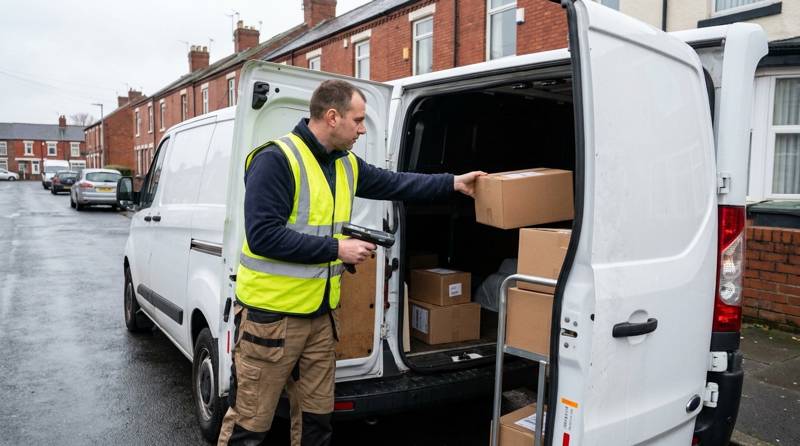
Courier and delivery work is one of the more accessible self-employed trades to start, since the barrier is largely a vehicle and the right insurance rather than years of training or an expensive qualification. The real cost decision is not whether you can afford to start, but whether to drive for an established platform with a low entry cost, or build an independent courier business that keeps more of each job's fee but takes longer to fill a diary.
This guide covers realistic 2026 UK costs across both routes, from insurance and Operator's Licence rules through to the van itself and the ongoing costs of actually running the round.
Startup Costs by Route
Whether you already own a suitable vehicle, and whether you plan to drive for a platform or build an independent client base, are the two biggest cost drivers.
| Route | Typical Startup Cost |
|---|---|
| Own car/small van, driving for an established platform | £500 to £1,500 |
| Own vehicle, going independent with direct business clients | £1,500 to £4,000 |
| Buying a used van, driving for a platform | £7,000 to £15,000 |
| Buying a used van, fully independent business | £8,000 to £18,000 |
Vehicle Costs
Many couriers start with a car or car-derived van they already own before investing in a dedicated panel van once volume justifies it.
- Estate car or car-derived van (already owned): £0 upfront beyond any needed racking or a boot liner, £50 to £150.
- Used small panel van, 3 to 6 years old: £6,000 to £14,000.
- New small panel van: £18,000 to £28,000, usually financed rather than bought outright.
- Racking, shelving and secure storage fit-out: £200 to £800 depending on the type of goods carried.
- Sack truck, straps and basic handling equipment: £80 to £200.
Operator's Licence — Do You Need One?
A Standard Operator's Licence, issued by the Traffic Commissioner, is required for goods vehicles over 2.5 tonnes gross vehicle weight used for hire or reward within Great Britain, and for lighter vehicles used for international haulage under EU rules. The large majority of single-van domestic couriers, using a standard car-derived van or small panel van under this weight threshold, do not need an Operator's Licence. It is worth checking the exact plated weight of any specific van before buying, since some larger panel vans creep close to or over the 2.5 tonne threshold once loaded.
Insurance
Standard car or van insurance does not cover carrying goods for payment, and driving without the correct cover invalidates a claim if something goes wrong.
| Insurance Type | Typical Annual Cost |
|---|---|
| Hire and reward goods-in-transit cover | £800 to £2,000 |
| Public liability insurance | £100 to £250 |
| Breakdown cover, commercial | £80 to £180 |
Most courier platforms and business clients will ask to see proof of hire and reward cover and public liability before accepting a new driver, so arranging this before applying saves a delay at sign-up.
Platform vs Independent
Driving for an established parcel network subcontractor round, food delivery app, or same-day courier platform has by far the lowest entry cost, often under £500 once a suitable vehicle and insurance are in place, since the platform supplies the customer base and often the branded kit. The trade-off is platform commission, typically 15 to 30 percent of each job's fee, plus less control over routes and availability.
Going fully independent, marketing directly to local businesses needing regular deliveries, keeps a larger share of each job but takes longer to build a full diary and needs its own marketing spend, typically £300 to £1,000 to get started with a simple website, local business cards and initial outreach.
Ongoing Running Costs
- Fuel: £300 to £700 a month depending on mileage and vehicle, the single largest recurring cost.
- Vehicle servicing and MOT: £300 to £600 a year for a well-maintained van.
- Insurance renewal: £900 to £2,250 a year combined, per the table above.
- Tracking and route planning app: £15 to £40 a month, worth it for the fuel and time saved on a busy multi-drop round.
- Platform commission, if applicable: 15 to 30 percent of job value, scaling directly with volume.
- Accountancy: £300 to £700 a year for a sole trader.
How to Start Cheaper
- Use a vehicle you already own to test demand first. Proving the round works before committing to a dedicated van purchase avoids the single largest upfront cost.
- Start on a platform before going independent. The lower entry cost and built-in customer base make it a lower-risk way to learn the trade before investing in independent marketing.
- Get at least two insurance quotes. Hire and reward cover pricing varies significantly between specialist courier insurers and generalists.
- Buy used rather than new. A well-maintained 3 to 6 year old van does the same job as a new one at roughly a third of the cost.
- Check the Operator's Licence threshold before buying a van. Staying comfortably under 2.5 tonnes avoids an entire additional layer of licensing cost and compliance. If you are also weighing up other self-employed routes, see our guides on starting a man and van business and public liability insurance.
Starting a courier business in the UK costs £500 to £1,500 using a vehicle you already own and driving for an established platform, rising to £6,000 to £18,000 if buying a dedicated van and building an independent client base. Most single-van domestic couriers do not need an Operator's Licence. Hire and reward insurance is non-negotiable and standard vehicle cover will not pay out without it.